Tuesday, May 11, 2010

Virgo kernel checked in and ready for use

The Virgo kernel was checked in to Eclipse git earlier today and is ready for you to take it for a spin.


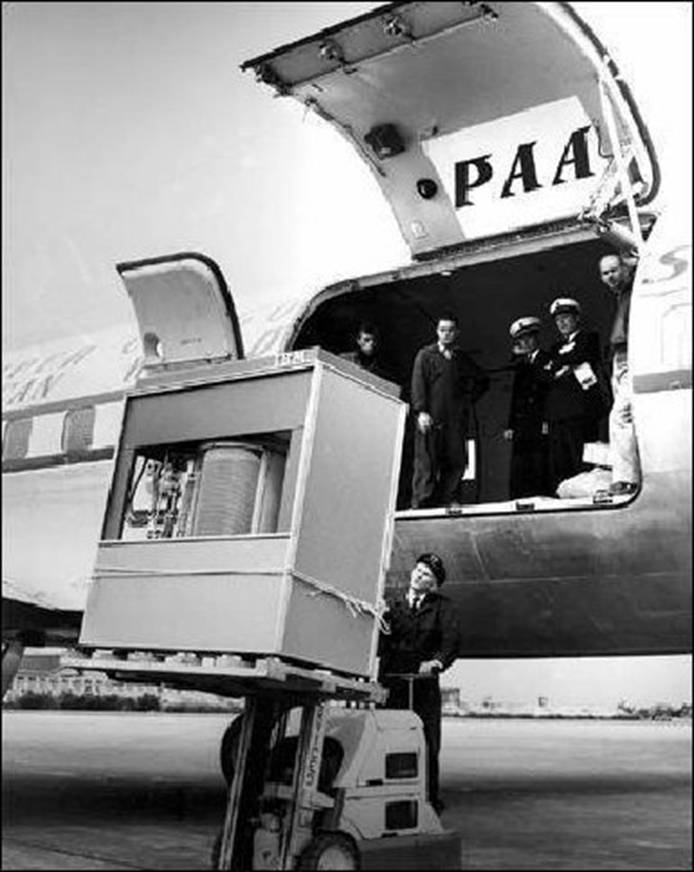
No, this isn't the Virgo kernel - it's a 5 Mb hard disk from 1956 which weighed over a ton. The Virgo kernel zip file would have needed a couple of tons of hard disk for storage. Thank goodness times have moved on.

Wednesday, May 05, 2010

IntelliJ IDEA Support for dm Server

IntelliJ just announced support for dm Server. Although I haven't tried using the support, it appears to be at a reasonable level of function and only a little behind the SpringSource Tools Suite (as far as dm Server support is concerned) with plans to fill the gap. IntelliJ haven't mentioned Virgo yet, but I'm hopeful that the Eclipse (RT) branding won't put them off.

This, in my opinion, is a sign of a healthy runtime: multiple vendors competing on tooling. I'd like to see the same on management tooling which could be implemented relatively easily layer to dm Server's JMX interface.

Friday, April 23, 2010

First Virgo components available for development

See this if you are interested in doing some Virgo development.

Special thanks go to the Eclipse IP team, especially Barb and Sharon, for making this possible at this stage.

Also thanks to Chris Frost for his help in raising CQs.

Thursday, April 01, 2010

Virgo contribution underway

I just finished entering the main CQs (Contribution Questionnaires) for Virgo. The corresponding tracking bugs, which are visible to everyone, are at the bottom of the list here.

There are now two gating factors before we can commit the code: the workload of the small but committed Eclipse legal team and my team's ability to field any issues they raise...


Once we've gotten the code committed, it will be possible to others to clone the git repositories, build, test, develop improvements, and submit patches. Essentially we'll be in business as far as contributors and build-it-yourself users are concerned.

Later, when we've also gotten the 3rd party dependencies through the legal process, we'll be able to start doing releases out of eclipse.org.

Friday, March 26, 2010

EclipseCon 2010 Virgo Presentation

Reflections on EclipseCon

EclipseCon has been a great conference - on a par with the Spring conferences for enthusiasm and quality of talks etc. There was an enthusiastic welcome to the Virgo project which made my attendance really worthwhile. Several people discussed possible contributions to the Virgo project and there were a number of useful chats with potential consumers of Virgo as well as committers on other EclipseRT components who are keen to see Virgo fully integrate with the rest of RT.

For me, the highlight was the Virgo BoF with a room full of people really interested in learning more about Virgo. I was able to give a bit more detail about the internals of Virgo, clarify the separation of the various components, and start to explain the concepts underpinning the kernel.

I'd like to congratulate the organisers for putting on such a great conference and I look forward with anticipation to future EclipseCons.

Saturday, March 20, 2010

Eclipse Virgo home page

Eclipse Virgo. What more can I say, other than "Thanks Chris"?

Wednesday, March 17, 2010

EclipseCon Sessions

EclipseCon starts in next week and there are plenty of sessions relevant to Virgo.

I'm doing the main Virgo talk and there's a Virgo launch BoF session (and a proposed BoF on Virgo tooling). I'm on panels on Gemini and the future of application servers and co-leading a BoF on application models for OSGi. I'm also giving a brief update on Virgo at the Eclipse Membership Meeting.

Then there's the main Gemini talk, an EclipseRT BoF, and other sessions on OSGi, Apache Aries, Maven and OSGi, and JPA and OSGi.

Wednesday, February 03, 2010

"Strong" optionality

Richard Hall tells me Felix interprets optional imports as "strong", to use my earlier term. I believe there is enough latitude in the OSGi spec to permit this. Equinox takes the opposite interpretation and can discard optional imports of available packages in order to overcome uses constraints which would otherwise prevent resolution.

Regardless of that, I think that strong optionality is more likely to be what the user wants.

Without strong optionality, if the user provides a bundle which can satisfy some optional imports, they are not likely to be pleased if the resolver discards corresponding optional imports as the functions provided by the bundle will then be unavailable. Better to fail fast with diagnostics that allow the user to sort out the uses constraints.

Even worse, without strong optionality resolution may fail after a protracted attempt to discard combinations of optional imports in order to get a valid wiring. All the optional imports could be discarded before embarking upon a protracted search to ensure that the search is not in vain. Perhaps Equinox already does this, but I'm doubtful it as it could be criticised as optimising for the failure case.

OSGi resolution is NP-Complete. So what?

At last we have a proof, thanks to Robert Dunne, that the OSGi R4 resolution problem is NP-Complete. He showed that it is possible to represent a solution to the NP-Complete boolean satisfaction problem 3-SAT as a wiring of a carefully constructed set of OSGi bundles. After the idea arose of using a SAT solver to construct an OSGi resolver, some of us have been discussing the possibility of a SAT-based proof. The hard step was how to represent a boolean OR in terms of resolution, which Robert has now provided.

NP-Completeness tallies with the experience of those who have written an OSGi R4 resolver: it takes about a fortnight of intensive hacking, combined with sleepless nights, to crack the problem followed by a much longer period of bug fixing and optimisation. Now we know why: NP-Complete problems are hard to solve efficiently.

I'm partly to blame as I led the spec work on OSGi RFC 79 which added considerable function, and with it complexity, to the resolution algorithm. I presented some of the background at the 2004 OSGi Congress. The RFC 79 spec was one of the more interesting that the OSGi Core Platform Expert Group has worked on. There was a tension between addressing the basic use cases and creating something that was too hard to implement.

Fortunately, we developed a prototype resolver in the Equinox incubator. This provided useful feedback to the spec work, particularly when features were dropped from the spec which made the implementation more tractable. The team which created the prototype included Simon Burns, Steve Poole, and Tom Watson. Simon wrote the initial R4 resolver. Steve created a rigorous model-based test based on a slow, but functionally corrrect, resolver of his own. Tom provided much advice on the R3 resolver and eventually integrated the new resolver into Equinox and has been improving it ever since.

So what features emerged from this process that made the resolver NP-Complete? Well, crucial to the proof are the uses constraint and, its evil twin, optional imports. Steve Powell observes that the proof does not depend on the transitivity of the uses constraint. (Other, arguably much more evil, features in R4, require-bundle and fragments, also did not contribute to the resolver's intrinsic complexity.)

This suggests some practical ways round the problem. Examples occasionally crop up when the time to resolve a set of bundles becomes unacceptable. How can we work around such issues if we are willing to put in the effort?

Firstly, uses constraints can be avoided by preventing types from one package leaking out through the interface of another package. This is an application of the Law of Demeter.

Secondly, in some cases it may be possible to remove, or at least cut down, optional imports by using mandatory imports instead and splitting the function which has those dependencies across bundles so that the user's dependencies determine which bundles are needed.

These approaches are feasible only for new code. Bundles generated from popular Java libraries tend to exhibit both uses constraints and optional imports.

Another possibility we've been considering is a "strong" form of optionality in which the optional import cannot be discarded if it is locally satisfiable, i.e. before uses constraints are applied. Certainly the current definition of optional import is critical to Robert's proof. The challenge is to convince ourselves that R4 resolution with strong optionality in place of the current definition is no longer NP-Complete or, conversely, to prove the opposite.

I'm undecided. Strong optionality drastically reduces the search space in some cases. On the other hand, I feel there may be a proof based on 3-SAT in which multiple bundles import, but do not export, packages.
Wednesday, January 27, 2010

OSGi standards and adoption

The TSS thread on Virgo and whether or not OSGi is ready for mainstream enterprise application development contains some misconceptions.

Firstly, that SpringSource is somehow not involved in the OSGi standards process.

That couldn't be further from the truth. Recently we've led the standardisation of Spring DM into the blueprint service specification and reference implementation while IBM provided the compliance tests. We are developing the reference implementation of the OSGi web container while IBM wrote the specification and are providing the compliance tests. Then, as we look to the future, we are leading two, and involved in other, new specifications targeted at R4.3.

Secondly, it is easy to get the impression that other vendors, such as IBM and Oracle, are about to solve the adoption problem.

I certainly hope they do, but, at least in the case of IBM's WebSphere Application Server OSGi alpha, their programming models seem very similar to that of dm Server and their development and build tools, where the real adoption issues seem to be, do not seem to be particularly advanced.

Perhaps IBM's large customer base and marketing machine will encourage developers to jump the necessary hurdles. But the tricky thing about a product like WAS is that, after the alpha code has been rolled into the main product, it will be very hard to measure real usage. The only real evidence will be customer testimonials and APAR (i.e. external defect) rates against the OSGi features, which IBM typically do not publish.

Let's see how Virgo gets on. At least the adoption should be easier to measure as users will almost certainly be using it for its OSGi features.

Friday, January 15, 2010

Building OSGi applications

The recent SD Times article on Virgo paints an overly bleak picture of the problems of building an OSGi application.

Build certainly complicates adopting OSGi, but many users are willing to overcome that problem in order to get the benefits of modularity and the service registry.

Also various tools are available to help. We developed the bundlor tool for automatically generating bundle manifests from the code in a bundle. Peter Kriens's bnd tool provides similar function.

People have successfully developed Maven and Ant builds for OSGi projects and various helper plugins. for instance PAX Construct, are starting to emerge.

Also, SD Times fails to mention the Enterprise Bundle Repository which already makes available (directly or via other repository front ends) about a thousand of the most popular open source Java components packaged as OSGi bundles with carefully constructed bundle manifests.

Tuesday, January 12, 2010

Eclipse Virgo project

The news just broke. SpringSource are donating the dm Server code base to eclipse.org as part of the EclipseRT umbrella project. This should be just the server runtime that EclipseRT has been looking for. The Virgo project proposal is available and more details are on the SpringSource blog.

Tuesday, December 08, 2009

WebSphere OSGi Application Model

As noted previously, WebSphere Application Server's alpha support for OSGi applications is similar to that of SpringSource dm Server. Now IBM's open source server, Geronimo, has taken its first steps to join the party.

Apparently Geronimo 3.0 is now based on OSGi, like all other modern Java app servers. (I wonder what vestigial traces of its GBean/XBean heritage remain?)

Geronimo's OSGi application model is provided by the Aries incubator, so I wonder if that is also the base of the WAS alpha, since Geronimo is essentially WAS CE.

Maybe the answer is that the closed source WAS is also based on Aries, but I didn't dare accept the license agreement on the download to find out.

Monday, December 07, 2009

SpringSource dm Server catching on

The recently announced alpha driver of IBM WebSphere Application Server v7 support for OSGi applications is covered in a brief dzone interview with Kirk Knoernschild of the Burton Group.

As Kirk notes in his blog, SpringSource dm Server has already brought OSGi to the enterprise. dm Server v1.0 shipped in September 2008 and v2.0 will enter RC1 in the next few weeks.

The WAS alpha has some features in common with dm Server, notably repositories and applications along similar lines to plans and PARs. Immitation is the sincerest form of flattery or, putting it another way, IBM has validated dm Server's approach.

I'm still waiting for technical details of WebLogic DM Server, but since it is microkernel based (unlike WAS) and with a name like that, it's likely to validate dm Server further.

Meanwhile GlassFish and JBoss support for OSGi is coming along nicely, so it'll be fascinating to see what kind of OSGi application models these projects end up providing.

Tuesday, June 16, 2009

Jigsaw/JSR 294 on JavaPosse

I listened to most of the JavaPosse interview with Mark Reinhold and Alex Buckley about Project Jigsaw and JSR 294. It's nice to see some technical details emerging and I can start to see why OpenJDK would prefer a different design for modularity to that of Apache Harmony.

I was moderately surprised to find that the design point is to load multiple Jigsaw modules with "local" dependencies into the same class loader. I wonder how many class loaders the JRE will end up having? There was even talk of putting all the bootstrap classes in a single class loader. So maybe the answer is most of the JRE code will be loaded by in the bootstrap class loader and subdivided using JSR 294 constructs. Time will no doubt tell.

For the record, I hope I've never claimed that Apache Harmony has shipped runtime modularity. The Harmony class libraries are divided into bundles with OSGi metadata. A prototype that enforced those class loader boundaries in the JVM was built, but never shipped. It had a rather different design for bootstrap class loading to that being proposed for OpenJDK, but I suppose Harmony had the benefit of having modularity in mind from the start.

Saturday, June 13, 2009

OSGi, Scala, maven, and git

I've noticed a few people are integrating OSGi and Scala. In particular Heiko Seeberger is building OSGi bundles for the Scala language plus various utility modules and DSLs. Then he's using maven for build and git for version control.

I am, of course, a fan of OSGi. I'm rapidly warming to git. But I'm not sure Scala and maven really solve more problems than they introduce. I don't want to dwell on maven as I'm not sure other build systems are really much better, but Scala does raise lots of question in my mind.

Many years ago, I was keen to adopt new technology and some combinations worked really well while others just seemed to multiply the overall complexity. One particular combination was the use of Z specification language embedded using literate programming in a subset of our target programming language with proof rules. It was possible to create proof trees of simple specifications refined to the target language. The main problem was that there were very few people who could acquire the skills necessary to master the combined technology.

Well, perhaps that was an extreme example and maybe it was doomed from the start, but I have a niggling doubt about the size of the Scala language.

So I'd be delighted to understand what features of OSGi and Scala work well together (and what features are simply best not used as part of this combination). In particular, are there any particular problems which are significantly simplified by combining OSGi and Scala which cannot be attacked very well using OSGi (and Java) or Scala alone?

Postscript

This document partially answers my questions. Scala makes it easy to write a DSL for handling OSGi services simply.

This is similar to the kind of function provided by Spring DM (or, equivalently, the OSGi Blueprint service).

The main difference is that there is still some minimal clutter in the Scala program whereas with Spring DM POJOs are configured in XML to provide and use OSGi services. I suppose the Scala approach favours sophisticated use of OSGi services, but this is not the norm in typical enterprise applications.

Friday, June 12, 2009

Coding and hill-walking

I've recently been re-organising the internals of the SpringSource dm Kernel so that it can be extended to provide structured install artefacts known as "plans". The current code has been extended to provide a plan equivalent to the existing PAR files, but other variants of plans, unscoped and non-atomic, cannot be implemented without the necessary data structures being put in place.

From early in the development of dm Server 1.0, the team was using several terms which summarised the behaviour of the kernel, but which were not easily identified in the code. Terms such as "scope" and "deployment pipeline". As we started thinking about 2.0, we identified "plan", "install tree", and "install environment" as basic concepts, even if the latter was pretty fluffy.

Scopes were implemented as first class types quite a while ago now and were crucial to being able to make cloning work. One of the trickiest areas was performing operations on types which could be cloned or non-cloned. Explicit scopes enabled these operations to be coded to a non-cloned interface type and re-dispatched as necessary to the appropriate cloned type.

Recently, I've been turning deployment pipeline, install tree, and install environment into first class types. I really love this kind of work. It's rather like walking through a range of hills where the higher peaks are only visible when some of the lower summits are behind you.

Sometimes however things get much more strenuous. It's like the terrain is getting much steeper and there no obvious path to follow.

This afternoon I was struggling to structure the code to handle the starting of bundles. There's an interesting coordination and state management issue because starting a bundle has a synchronous phase defined by OSGi and often an asynchronous phase defined by Spring DM or the OSGi Blueprint Service. I made some progress, but I'm still not happy with the current code and it certainly isn't easily unit tested which is a good measure of code quality.

At this point, the only option is to take a break and come back to the problem with a clear head. I tried consulting colleagues and that helped quite a bit, but there are hopefully some really good abstractions waiting to be discovered.

I think the root cause of the complexity of this small area is that it is fairly low level and we're lacking some really good ways of thinking about the asynchronous processes involved. Occasionally, modelling processes in CSP and exploring the properties of the model using a model checker such as FDR has helped. But more often than not, the best approach seems to be iteratively cleaning up a bunch of code until a good structure starts to emerge.

In the worst case, I'll make the code as clean as possible and add it to the list of areas where future discoveries will hopefully make things cleaner. But I'm hoping for a much better outcome.

Well, that's enough for now. I put this blog together as I expect other people have similar experiences when working in complex areas of software and it's good to learn from each other. I'd be interested in your perspective and how you approach these kinds of activities.

I'll leave you with a hill-walking illustration of my current position: standing on one peak trying to make out the next one in the mist.

Tuesday, April 28, 2009

CaseInsensitiveMap<V>

I recently wrote some utility code which we'll be using to process bundle manifests, typically to map header names to typed values. It was surprising that this code was neither available elsewhere nor completely trivial to implement.

So what was it? A map with String keys which is insensitive to the case of the keys and which preserves the case of the keys. Apache Commons has a CaseInsensitiveMap which whacks the keys to lower case on input. I was tempted to use that code, but in our environment, it's important to preserve the case of keys.

For example, the bundlor tool will eventually use this code to create bundle manifests from templates. If the user carefully spells headers in the template with mixed case, e.g. "Export-Package", they would probably be disappointed to see the headers converted to lower case in the generated manifest.

Implementing an (Apache licensed) case-preserving CaseInsensitiveMap was an interesting exercise. I saved some time by extending AbstractMap and AbstractSet (for the key and entry sets). I used an instance of ConcurrentHashMap to maintain the state. I exposed one internal type to be package visible so I could get 100% unit test coverage and made some inner classes static to stop findbugs complaining.

Why blog about this? Simply to increase your chances of finding the class if you need it.

Thursday, April 09, 2009

SpringSource dm Server 2.0 M1

As in Rob's blog, we recently shipped the first milestone of dm Server v2.0. Apart from some new function, this marks an opening up of the dm Server development process with publicly accessible subversion repositories and issue tracker.

The 2.0 roadmap is pretty exciting, and includes constructing a Reference Implementation for RFC 66 ("web container for OSGi") from the existing web components of dm Server.

I'm spending most of my time down in the dm Kernel implementing "cloning" which, roughly speaking, enables a bundle to be wired more than one way, which is not normally possible in OSGi. Cloning copies bundles into an application's scope. This enables the OSGi resolver to have another go at wiring the dependencies of the cloned bundles in a way which suits the application. More information on cloning is included in the above blog entries.

Application scopes can be thought of as an alternative to "nested" OSGi frameworks, which are being specified in the OSGi Alliance and implemented in Equinox. The contents of an application scope can "see" all the contents of the global scope which are not "shadowed" in the application scope. The contents of a nested framework can, by default, not see any of the content of the parent framework(s) unless the nested framework is explicitly defined to see some of the parents' contents.

Much of what we're learning about cloning into application scopes, such as how to calculate what needs cloning and how to manage cloned extenders, will also apply to cloning into nested frameworks if and when that becomes necessary.

Projects

OSGi (130) Virgo (59) Eclipse (10) Equinox (9) dm Server (8) Felix (4) WebSphere (3) Aries (2) GlassFish (2) JBoss (1) Newton (1) WebLogic (1)